
The Photographer’s Role in Styling a Home for Architectural Photography: What Architects, Builders, and Designers Should Know
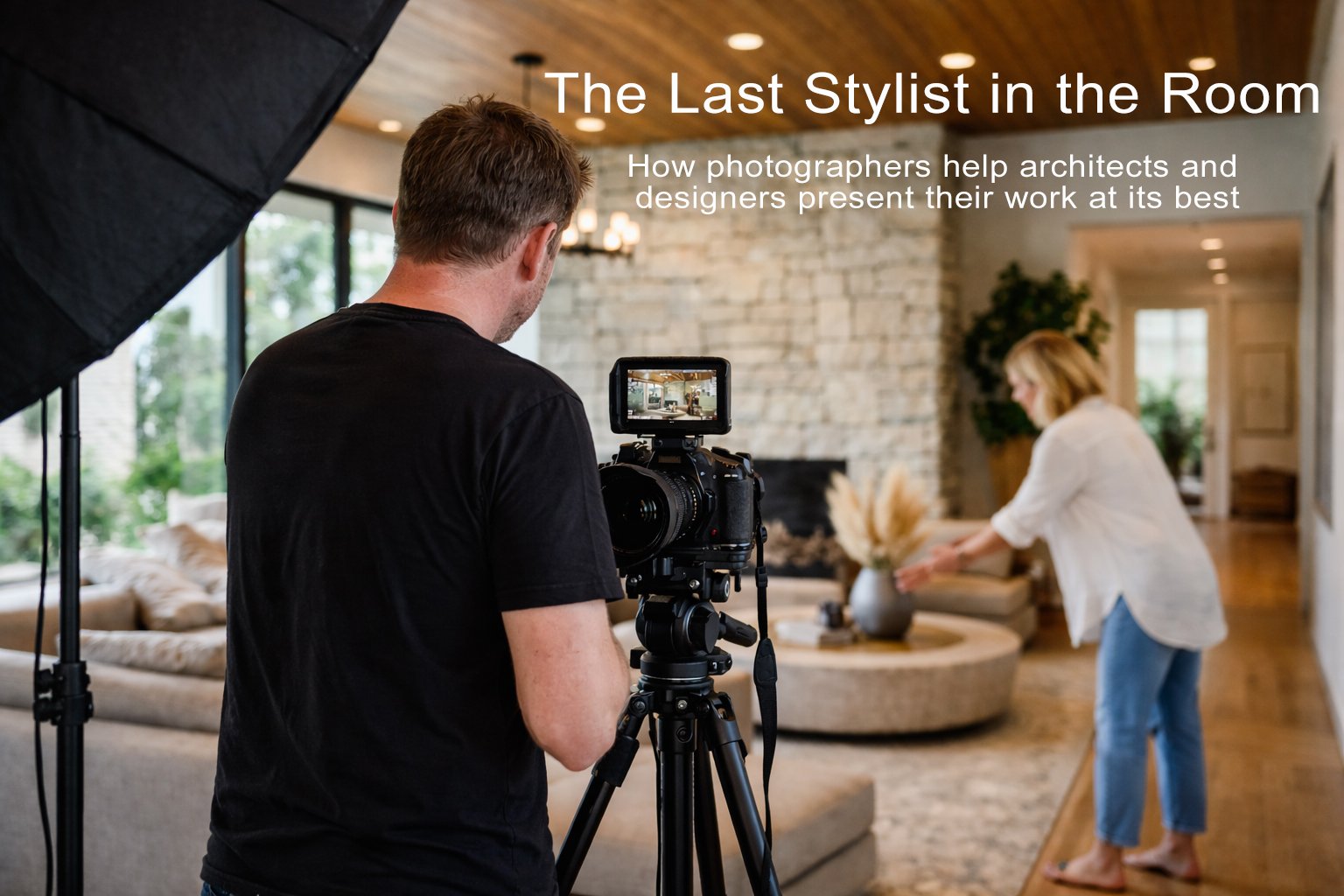
Why Architectural Photographers Often Become the Final Stylist on a Photo Shoot
When architects, builders, and interior designers hire a photographer to document a completed project, most people assume the designer handles all the styling.
And to be fair, the designer absolutely sets the stage. They spent months shaping the space. Selecting materials. Choosing furniture. Dialing in finishes and proportions.
But once the camera is set up, something interesting tends to happen.
The photographer quietly becomes the final stylist in the room.
Not because the photographer knows the design better than the design team. The architect and designer created the vision. The photographer’s job is to make sure that vision translates clearly through the lens.
And the camera can be a brutally honest critic.
Why Rooms Look Different Through a Camera
A room that feels perfectly balanced in person can suddenly look a little strange once the camera frames it.
The lens does not see the way our eyes do.
Architectural photography compresses a three-dimensional space into a flat image. The camera exaggerates angles, spacing, clutter, and alignment. Things that feel natural in the room can suddenly look crooked, heavy, or distracting.
Some of the most common things photographers notice in the frame include:
• Furniture that appears slightly crooked, even though it looks straight to the eye
• Accessories competing with architectural details
• Visual weight pulling the eye away from the design
• Objects blocking important sightlines
• Decorative items that suddenly look enormous in the photograph
This is why architectural photographers spend so much time studying the frame before pressing the shutter.
The goal is simple.
Make the architecture and design read clearly in the image.
Small Styling Adjustments That Make a Big Difference
Most styling adjustments during an architectural photography shoot are incredibly small.
Sometimes the designer laughs when I suggest them.
Then we look at the screen, and it suddenly makes perfect sense.
Typical adjustments might include:
• Turning a chair five degrees
• Removing one pillow from a sofa
• Straightening a stack of books
• Rotating a plant toward the light
• Sliding a rug slightly so it aligns with the architecture
• Adjusting curtains so they hang evenly
• Moving an object that blocks a key sightline
None of these changes alters the design.
They simply help the space photograph the way it deserves to be seen.
Think of it like tuning a guitar before a performance. The song is the same. It just sounds a whole lot better when everything is aligned.
What Styling Collaboration Looks Like on a Real Photo Shoot
The best architectural photography happens when the photographer and design team work together.
A typical shoot often looks like this.
1. The Designer or Stylist Prepares the Space
Furniture, art, and accessories are arranged exactly how the designer envisioned the room.
2. The Photographer Builds the Composition
The camera position is chosen to highlight the architecture and spatial relationships.
3. Micro Adjustments Are Made
Small tweaks improve balance inside the frame.
4. The Designer Reviews the Frame
The design team confirms the adjustments still represent the project accurately.
5. The Photograph Is Captured
Lighting, composition, and styling come together in the final image.
It is a collaborative process. No egos. Just everyone trying to make the project look its best.
Why Styling Matters for Architects, Builders, and Designers
Professional architectural photography is rarely just documentation.
These images become powerful marketing tools for architects, builders, and interior designers.
Design professionals rely on photography for:
• Architecture and design magazine submissions
• Industry awards and recognition
• Portfolio websites
• Social media marketing
• Press and editorial features
• Client presentations
Strong styling ensures that the viewer’s attention stays focused on the architecture and design.
If styling is cluttered or slightly unbalanced, the eye drifts away from the very thing the image is supposed to highlight.
The Most Important Styling Rule in Architectural Photography
Less is usually better.
One of the most common styling mistakes during architectural photography is adding too much.
More accessories rarely improve a photograph.
In fact, simplifying the scene usually makes the architecture stronger.
Common adjustments include:
• Removing an extra pillow from a sofa
• Clearing small appliances from kitchen counters
• Reducing decorative objects on tables
• Removing distracting personal items
Architectural photography works best when the design has room to breathe.
Sometimes the most valuable styling decision is simply taking something away.
Trust me. No one has ever hired an architect because of a decorative bowl.
Why Experienced Architectural Photographers Develop a Styling Instinct
After photographing hundreds of homes and buildings, patterns start to appear.
Experienced architectural photographers quickly recognize when a room needs a small adjustment to photograph well.
They can immediately spot:
• Furniture that disrupts the composition
• Objects that pull attention away from the architecture
• Accessories that dominate the frame
• Small misalignments that the camera exaggerates
It becomes almost second nature.
And yes, sometimes that means turning a chair two inches and suddenly the whole room clicks.
The Shared Goal of Designers and Photographers
At the end of the day, architects, builders, designers, and photographers all want the same thing.
To show the project at its absolute best.
Great architectural photography does not change the design.
It simply presents the design clearly, beautifully, and intentionally.
The best shoots feel collaborative.
The designer prepares the space.
The photographer refines the frame.
Together, they create images that showcase the project at its highest level.
And more often than not, the difference between a good photo and a great one comes down to a tiny adjustment.
Usually about five degrees.
